Are Marble Countertops Worth It? Honest Answer
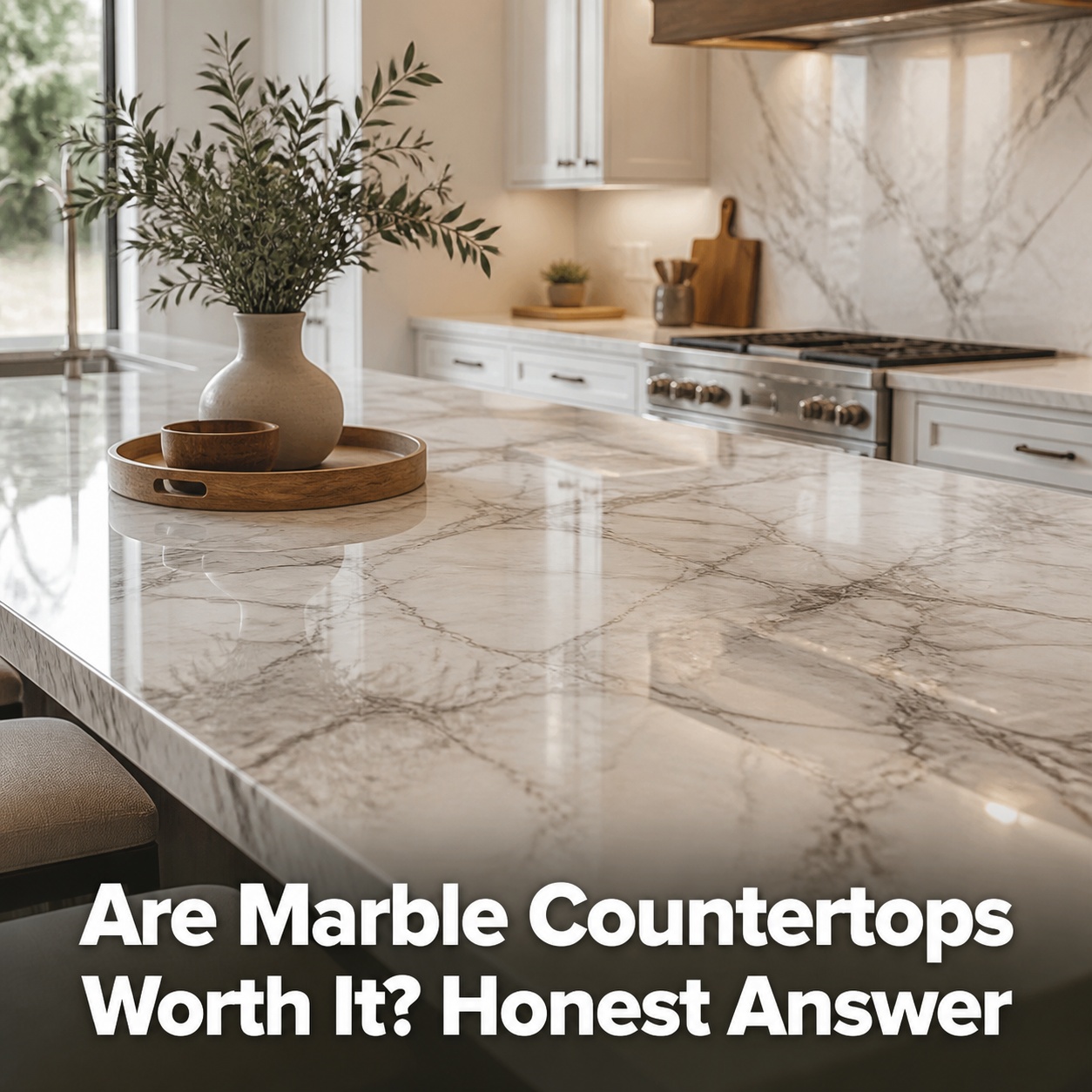
Marble has a way of stopping people in their tracks. Whether it’s a sweeping kitchen island or a sleek bathroom vanity, the look of natural marble is hard to replicate and even harder to ignore. That visual pull is exactly why so many homeowners find themselves seriously considering it during a kitchen remodel or bathroom upgrade.
But the honest conversation about marble countertops goes well beyond how they look. There are real trade-offs involved, and the decision deserves more than surface-level enthusiasm. This article breaks down everything you need to know, from the material itself to the maintenance realities, so you can make a genuinely informed choice.
The short answer to whether marble countertops are worth it depends entirely on your lifestyle, your priorities, and how you define value. For some homeowners, marble is a dream come true. For others, it becomes a source of daily frustration. Let’s get into the details.
Understanding Marble Countertops
What Marble Is And How It Differs From Other Stones
Marble is a natural stone formed when limestone undergoes intense heat and pressure deep within the earth. That metamorphic process creates the distinctive veining and crystalline structure that makes marble so visually striking compared to other countertop materials.
Unlike granite countertops, which are igneous rocks with tightly interlocked minerals, marble is softer and more porous. This difference in composition is what makes marble both beautiful and more vulnerable to damage in everyday use.
Quartz countertops, by contrast, are engineered from crushed stone and resin, making them non-porous and more uniform. Marble sits in a different category entirely. It’s a living, reactive surface that changes over time.
| Material | Porosity | Hardness | Maintenance Level |
|---|---|---|---|
| Marble | High | Medium | High |
| Granite | Low-Medium | High | Medium |
| Quartz | Very Low | High | Low |
| Porcelain | Very Low | Very High | Low |
| Laminate | Low | Low | Low |
Common Types Of Marble Used In Kitchens And Bathrooms
Carrara marble is the most widely used variety in residential projects. It features a soft white or grey background with subtle, feathery veining that works well in both traditional and contemporary spaces.
Calacatta marble is rarer and more dramatic, with bolder, thicker veining on a brighter white base. It’s considered a premium option and is often used in high-end kitchen and bathroom countertop applications.
Other popular varieties include Statuario, Emperador, and Nero Marquina. Each has a distinct look, and your choice of marble type will significantly affect both the aesthetic outcome and the countertop cost.
How Marble Countertops Are Installed And Finished
Installation begins with a professional stone fabricator measuring your space and cutting slabs to fit. The precision required here is significant. Marble is heavy, brittle during cutting, and unforgiving of measurement errors.
Finishing options include polished, honed, and leathered surfaces. Polished marble has a glossy, reflective finish that shows etching more visibly, while honed marble has a matte look that hides surface damage better.
Sealing marble is typically done at installation and needs to be repeated periodically. A good fabricator will walk you through the sealing schedule and finishing options before the slabs are cut.
Benefits Of Choosing Marble Countertops
Aesthetic Appeal And Design Versatility
No engineered material fully replicates the depth and movement of natural marble. The veining is unique to each slab, which means your countertop is genuinely one of a kind.
Marble works across a wide range of design styles. It suits classic white kitchens, moody dark interiors, minimalist bathrooms, and ornate traditional spaces equally well.
For bathroom countertops specifically, marble adds a spa-like quality that’s difficult to achieve with other materials. If you’re weighing your options for a vanity, it’s worth reading about the best countertop material for a bathroom vanity to see how marble stacks up against alternatives in that specific context.
Heat Resistance And Performance In Daily Use
Marble has solid heat resistance, which is one reason it’s been used in kitchens for centuries. You can set a warm pan on it without the surface scorching or discoloring the way laminate countertops might.
That said, thermal shock from extremely hot cookware can still cause cracking over time. Using trivets is still a smart habit, even with a heat-resistant natural stone surface.
Marble’s naturally cool temperature is a genuine advantage for bakers. Pastry dough, chocolate work, and other temperature-sensitive tasks benefit from a surface that stays cool without refrigeration.
Impact On Home Value And Buyer Perception
Marble countertops carry a strong perception of luxury among buyers. In higher-end markets, they can contribute positively to resale value and help a home stand out during showings.
The impact on home value isn’t guaranteed, though. In mid-range markets, buyers may actually be concerned about the maintenance requirements rather than impressed by the material.
If resale value is a primary driver for your countertop decision, it’s worth exploring which countertop materials perform best for resale before committing to marble specifically.
Drawbacks, Risks, And Maintenance Realities
Staining, Etching, And Scratching Issues
Etching is the most misunderstood issue with marble. It’s not a stain, it’s a chemical reaction between the stone’s calcium carbonate and acidic substances like lemon juice, vinegar, wine, or tomato sauce.

Etching leaves dull marks on the surface that can’t be wiped away. On polished marble, these marks are highly visible. On honed marble, they’re less obvious but still present.
Staining is a separate issue caused by liquids absorbing into the porous stone. Oils, coffee, and red wine are common culprits. Regular sealing reduces staining risk but doesn’t eliminate it entirely.
Cleaning, Sealing, And Long-Term Care Requirements
Marble cleaning requires pH-neutral products specifically formulated for natural stone. Standard kitchen cleaners, bleach, and anything acidic will damage the surface over time.
Sealing marble is not a one-time task. Depending on usage and the specific stone, resealing is needed periodically to maintain protection. Some homeowners find this manageable; others find it genuinely burdensome.
- Use only stone-safe, pH-neutral cleaners daily
- Wipe spills immediately, especially acidic liquids
- Reseal the surface on a regular schedule
- Use cutting boards and trivets consistently
- Avoid dragging heavy or sharp objects across the surface
Costs, Hidden Expenses, And Budget Considerations
Marble countertop cost is driven by several factors: the type of marble selected, slab thickness, edge profile complexity, cutouts for sinks and appliances, and your geographic location.
Carrara marble sits at the more accessible end of the natural stone spectrum. Calacatta and other rare varieties move into premium territory and can cost significantly more than even high-end granite countertops.
Hidden expenses include professional sealing, specialty cleaning products, and potential repairs if etching or chipping occurs. Getting a written quote from a qualified stone fabricator is the only reliable way to understand your actual project cost.
Are Marble Countertops Worth It For Different Homeowners?
Marble In Busy Family Kitchens
A busy family kitchen is arguably the hardest environment for marble to thrive. Kids, cooking, spills, and daily chaos create exactly the conditions that cause etching and staining.
If your kitchen sees heavy daily use with multiple cooks, acidic foods, and limited time for careful maintenance, marble will likely show wear faster than you’d like. The marble pros and cons shift unfavorably in this context.
For high-traffic kitchens, it’s worth seriously considering what countertop material actually holds up best in a busy kitchen before making a final decision. Marble durability simply has limits that other materials don’t share.
Marble For Serious Cooks And Bakers
Serious bakers often love marble for one specific reason: its naturally cool surface. Rolling pastry dough, tempering chocolate, and working with delicate preparations all benefit from a surface that doesn’t warm up quickly.
The trade-off is that cooking-focused kitchens also tend to involve acidic ingredients, oils, and frequent spills. A dedicated marble baking section paired with a more durable primary countertop material is a practical compromise many serious cooks choose.
Marble alternatives like quartzite offer a similar aesthetic with better durability, which is worth considering if you want the look without the full maintenance commitment.
Marble In Luxury, Rental, And Resale-Focused Properties
In luxury properties, marble countertops are often expected. They signal quality and craftsmanship in a way that engineered materials don’t quite match, and buyers in that market understand and accept the maintenance requirements.
Rental properties are a different story. Tenants may not follow the careful maintenance protocols marble requires, leading to damage that becomes the owner’s problem. Most property investors choose more forgiving countertop materials for rentals.
For resale-focused projects, the calculus depends heavily on your target buyer. Marble can be a strong selling point in the right market and a liability in others. Understanding your buyer profile matters as much as the material itself.
Conclusion
Marble countertops are genuinely worth it for the right homeowner in the right setting. They offer unmatched beauty, a cool working surface, and a sense of luxury that holds real appeal in both kitchens and bathrooms.
The honest trade-off is that marble demands more care than most other countertop materials. Etching, staining, and regular sealing are real considerations, not minor footnotes. If you’re prepared for that reality, marble can be a deeply satisfying long-term choice.
If low maintenance is a priority, exploring the best low-maintenance countertop options will give you a clearer picture of what alternatives exist. The right countertop material is ultimately the one that fits how you actually live, not just how you want your kitchen to look.
FAQ
Can I Prevent Stains And Etching On Marble Countertops?
You can significantly reduce staining by sealing marble regularly and wiping spills immediately. Etching is harder to prevent entirely because it results from chemical contact, not just absorption. Using cutting boards, avoiding acidic foods directly on the surface, and choosing a honed finish over polished will all help minimize visible damage over time.
Is Marble A Better Choice Than Quartz Or Granite For My Kitchen?
It depends on your priorities. Marble offers superior aesthetics and a cool surface but requires more maintenance. Quartz countertops are more durable, non-porous, and easier to care for. Granite countertops fall somewhere in between. For a detailed side-by-side look at how these materials compare, the breakdown of marble vs quartz for kitchen countertops covers the key differences clearly.
How Long Do Marble Countertops Typically Last With Proper Care?
Marble is an extremely durable natural stone that can last for decades with proper care. Many historic buildings feature marble surfaces that have held up for centuries. In a residential kitchen or bathroom, well-maintained marble countertops should last the lifetime of the home. The key variables are sealing consistency, cleaning habits, and how carefully the surface is protected from acidic substances and heavy impact.