Marble vs Quartz: Which Countertop Wins?
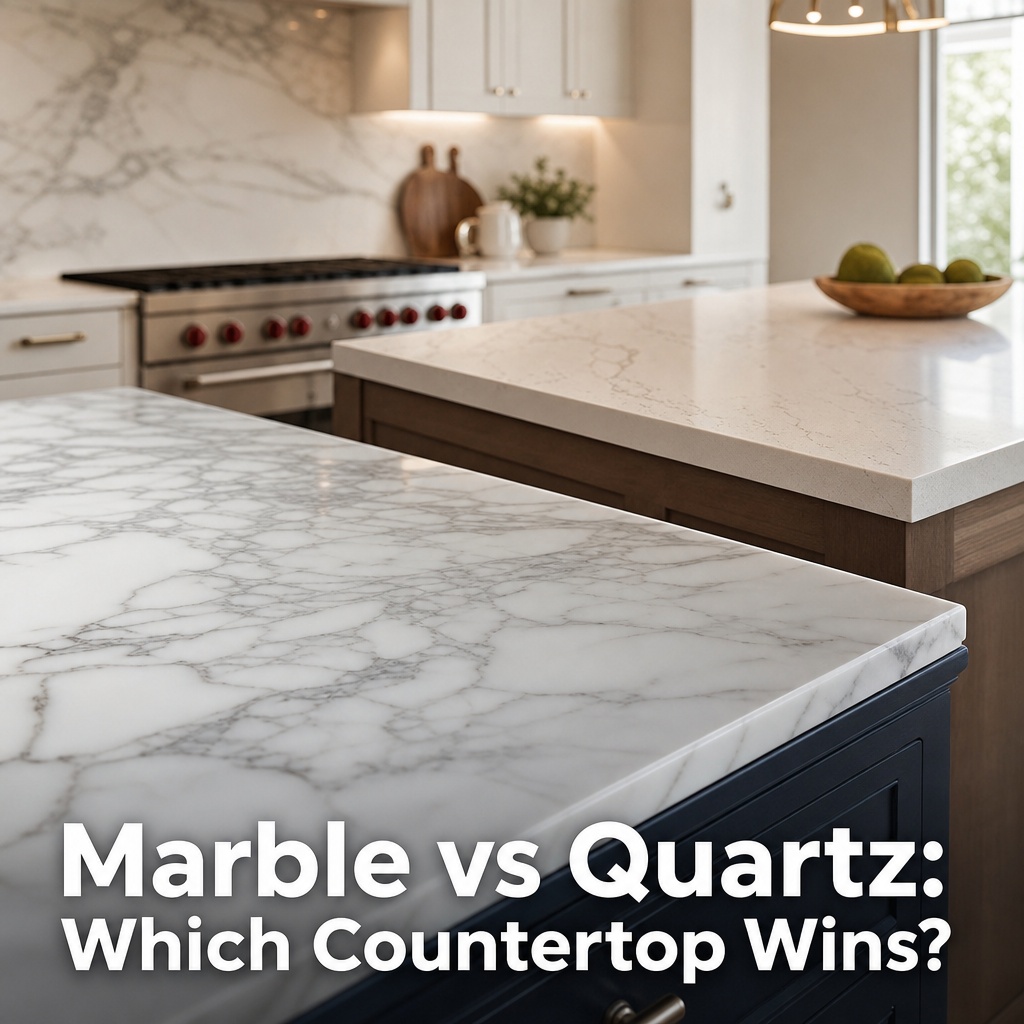
Choosing a countertop material is one of the most consequential decisions in any kitchen remodel. The surface you pick will be touched, tested, and judged every single day, by you, your family, and eventually a future buyer walking through your home. Two materials dominate this conversation above all others: marble and quartz.
Both are beautiful. Both are premium. But they perform very differently under the pressures of real kitchen life. One is a gift from the earth, shaped by heat and pressure over millennia. The other is engineered in a factory to solve the very problems that natural stone creates. Understanding those differences is what separates a satisfying long-term investment from an expensive regret.
This guide breaks down every meaningful comparison between marble and quartz (aesthetics, durability, maintenance, cost structure, and real-world use cases) so you can make a confident, informed decision for your specific kitchen and lifestyle.
Overview of Marble and Quartz as Kitchen Countertop Materials
Before comparing performance, it helps to understand what each material actually is. Their compositions explain almost everything about how they behave in a kitchen environment.
| Feature | Marble | Quartz |
|---|---|---|
| Composition | Natural stone (metamorphic) | Engineered stone (93% quartz + resin) |
| Porosity | High, requires sealing | Non-porous, no sealing needed |
| Scratch Resistance | Moderate | High |
| Heat Resistance | Moderate | Moderate (resin can discolor) |
| Maintenance Level | High | Low |
| Cost Tier | Mid to premium | Entry to premium |
| Unique Appearance | Yes, every slab differs | Consistent and uniform |
What Is Marble? Natural Composition, Appearance, and Common Varieties
Marble is a natural stone formed when limestone undergoes intense heat and pressure deep within the earth. That geological process creates the crystalline structure and distinctive veining patterns that make marble so visually striking. No two slabs are identical, which is part of its enduring appeal.
Common varieties used in kitchen countertops include Carrara, Calacatta, Statuario, and Emperador. Carrara is the most widely available and tends to sit at the more accessible end of the marble price spectrum. Calacatta and Statuario feature bolder, more dramatic veining and command premium pricing.
Marble ranges from bright white to soft grey, creamy beige, and deep green or black depending on the mineral content present during formation. Its surface has a natural luminosity that engineered stone has long tried to replicate.
What Is Quartz? Engineered Composition, Appearance, and Popular Brands
Quartz countertops are engineered stone products made from roughly ninety-three percent ground natural quartz crystals bound together with polymer resins and pigments. The manufacturing process allows for precise control over color, pattern, and consistency. That consistency is both quartz’s greatest strength and its most debated limitation.
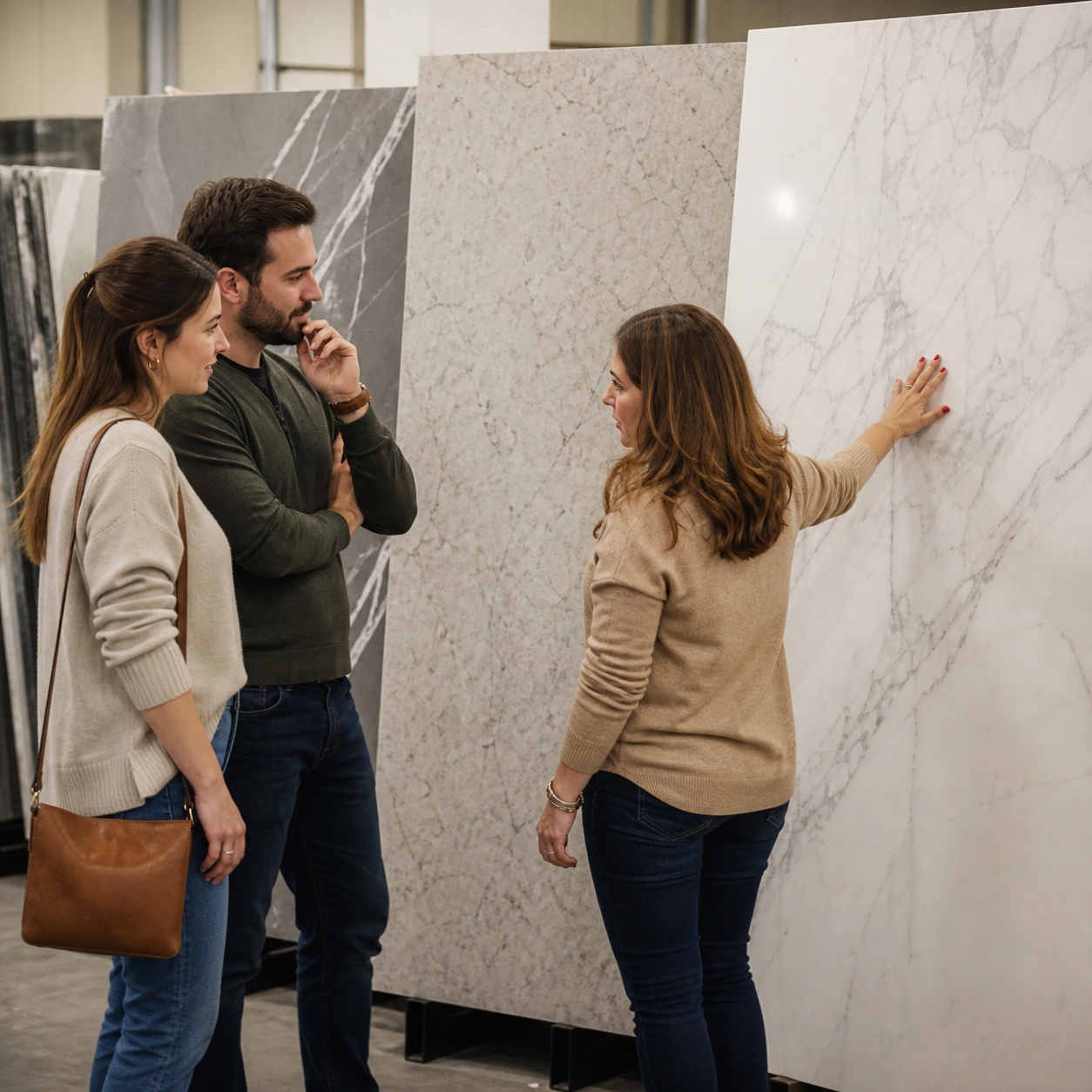
Quartz is produced by a number of manufacturers, and each one offers its own collections, warranty terms and surface finishes. The marble-look collections are the ones most homeowners are drawn to, engineered with veining meant to read like natural stone. The differences between lines are far easier to judge with the slabs in front of you than from a sample chip.
Because quartz is manufactured, it can be produced in colors and patterns that natural stone simply cannot offer, from solid whites and blacks to bold blues and greens. This makes it exceptionally versatile for modern kitchen design.
Visual Style Comparison: Veining, Color Options, and Design Flexibility
Marble’s veining is organic, unpredictable, and deeply personal. When you select a marble slab, you are choosing that exact piece of stone, with its specific movement, its particular grey or gold tones and its unique character. That individuality is irreplaceable.
Quartz has made enormous strides in mimicking marble’s appearance. High-end quartz collections now feature realistic veining, soft tonal variation, and even subtle texture. However, a trained eye can usually distinguish engineered stone from the real thing, particularly in how the pattern repeats across a large surface.
For design flexibility, quartz wins on color range and predictability. For raw visual drama and authenticity, marble remains the gold standard. Your backsplash, cabinetry, and overall kitchen aesthetic should guide which direction serves your space better.
Feature-by-Feature Performance Comparison
This is where the real differences emerge. Aesthetics are subjective, but performance is measurable. Understanding how each material handles daily kitchen demands will clarify which one actually fits your life.
Durability and Hardness: Resistance to Scratches, Chips, and Daily Wear
Marble scores a five on the Mohs hardness scale, making it softer than granite and significantly softer than quartz, which typically scores between six and seven. In practical terms, marble can be scratched by knives, keys, and even some ceramic dishes if dragged across the surface. Quartz resists scratching far more effectively under normal kitchen use.
Chipping is a concern for both materials along edges, particularly with thinner slabs or aggressive edge profiles. However, marble’s softer composition makes it more vulnerable to chipping from dropped heavy objects. Edge profile selection matters. A beveled or eased edge tends to be more chip-resistant than a sharp square edge on either material.
For households with heavy daily cooking activity, quartz’s superior scratch resistance makes it the more practical choice. If you want a deeper look at how these materials stack up in demanding kitchens, this comparison of the best countertop material for a busy kitchen covers the full picture across multiple surface types.
Stain and Heat Resistance: Spills, Hot Pots, and Everyday Kitchen Use
Marble is porous, which means liquids can penetrate the surface if not wiped up promptly. Acidic substances such as wine, lemon juice, tomato sauce and vinegar cause a chemical reaction called etching. Etching leaves dull, lighter marks on the surface that are distinct from stains but equally frustrating. Sealing reduces staining risk but does not prevent etching.
Quartz is non-porous and highly stain-resistant. Spills sit on the surface rather than absorbing into it, making cleanup straightforward. However, quartz has its own heat vulnerability. The polymer resins used in manufacturing can discolor or crack under sustained high heat. Placing hot pots directly on quartz without a trivet is not recommended.
Marble actually tolerates brief heat contact slightly better than quartz in terms of surface discoloration, but neither material should be used as a hot pad. Trivets and cutting boards are essential habits regardless of which surface you choose.
Porosity, Sealing, and Hygiene: Maintenance Needs and Food Safety
Marble’s porosity is its most significant practical drawback in a kitchen environment. Without proper sealing, bacteria and moisture can work into the stone’s surface over time. Sealing marble countertops is not a one-time task. It needs to be repeated periodically depending on usage and the specific stone’s density.
Quartz requires no sealing. Its non-porous surface does not harbor bacteria or absorb liquids, making it inherently more hygienic for food preparation. This is a meaningful advantage in a space where raw meat, produce, and cooking liquids are handled regularly.
Hygiene-conscious households and professional-style home kitchens consistently favor quartz for this reason. The maintenance gap between the two materials is real and cumulative. Marble demands ongoing attention that quartz simply does not.
Longevity and Aging: Patina Development Versus Color Stability
Marble ages visibly. Over time, it develops a patina, a softening of the surface finish that many homeowners find beautiful and others find distressing. Etching, minor scratches, and subtle color shifts accumulate into a lived-in look that tells the story of the kitchen’s use. Whether that appeals to you is entirely personal.
Quartz maintains its appearance with minimal change over time. The color and pattern you select on day one will look essentially the same years later, provided it is cleaned properly and protected from prolonged heat exposure. For homeowners who want predictability and visual consistency, quartz delivers it reliably.
Both materials can last decades when properly cared for. The difference is not longevity. It is the nature of how each material changes, or does not change, with age.
Cost, Installation, and Long-Term Value
Budget is always part of the conversation, and both marble and quartz span a wide range of price tiers. Understanding what drives cost helps you make smarter decisions at every stage of the project.
Upfront Material and Fabrication Costs: Typical Price Ranges
Both materials are available across entry-level, mid-range, and premium tiers, but the factors driving cost differ. For marble, price is primarily determined by rarity, origin, veining intensity, and slab thickness. Carrara marble sits at the more accessible end; Calacatta and Statuario command significantly higher prices due to their dramatic appearance and limited availability.
For quartz, brand reputation, collection tier, and surface finish drive pricing. Entry-level quartz costs less than the premium collections. Fabrication complexity, meaning cutouts for sinks, edge profiles and unusual shapes, adds cost for both materials.
Generally speaking, mid-range quartz and mid-range marble occupy similar price territory. At the premium end, rare marble slabs can exceed even the most expensive quartz products. For an accurate picture of what your specific project will cost, the most reliable step is requesting a written quote based on your actual measurements and material selections.
Installation Considerations: Weight, Support Requirements, and Complexity
Both marble and quartz are heavy materials that require proper cabinet support and professional installation. Attempting a DIY installation with either material risks cracking the slab, damaging cabinetry, and voiding any material warranty. Professional countertop installation is strongly recommended for both.
Marble slabs, particularly thicker cuts, can be extremely heavy and require careful handling during transport and placement. Quartz slabs of comparable thickness carry similar weight. In both cases, your installer will assess whether existing cabinetry needs reinforcement before installation begins.
Edge profiles affect both cost and installation complexity. Intricate profiles like ogee or waterfall edges require more fabrication time and skill, increasing labor costs. Simpler profiles like eased or beveled edges are more budget-friendly and equally durable.
Ongoing Maintenance Expenses and Repair Options
Marble’s ongoing maintenance costs are real. Professional sealing, occasional polishing, and potential honing or refinishing to address etching and scratches add up over the life of the countertop. Minor etching can sometimes be addressed with DIY marble polishing products, but significant damage typically requires professional restoration.
Quartz requires very little ongoing investment. Regular cleaning with mild soap and water is sufficient for daily maintenance. Damage to quartz, meaning deep chips or cracks, is more difficult to repair invisibly than comparable damage to marble, which can often be honed and repolished to restore its surface.
If you are also evaluating surfaces for other rooms in your home, the same maintenance logic applies. This guide on the best countertop material for a bathroom vanity explores how these materials perform in lower-traffic but equally visible spaces.
Resale Value and Impact on Overall Kitchen Investment
Both marble and quartz are considered premium countertop materials that contribute positively to home value. Buyers in most markets respond well to either surface, particularly when the installation is high quality and the material is in good condition. For a thorough breakdown of how different surfaces perform at resale, the guide on the best countertop material for resale value is worth reading before you finalize your choice.
Marble carries a prestige factor that resonates strongly with luxury buyers. However, marble showing visible etching, staining, or wear can actually work against a sale if it appears neglected. Quartz in excellent condition tends to photograph well and appeal to a broad buyer demographic.
The honest answer is that neither material guarantees a specific return on investment. Kitchen remodel value depends heavily on the overall quality of the renovation, the local market, and buyer preferences in your specific area.
Use Case Scenarios and Choosing Between Marble and Quartz
The best countertop material is the one that fits your actual life, not the one that looks best in a showroom. These scenarios help clarify which surface makes sense for different households and project types.
Best Choice for Busy Family Kitchens and High-Traffic Cooking Spaces
Families with young children, frequent cooking, and high daily traffic need a surface that can take a beating without constant babysitting. Quartz is the clear winner in this scenario. Its stain resistance, scratch resistance, and zero-maintenance sealing requirements make it far more forgiving of the chaos that real family life produces.
Marble in a busy family kitchen is not impossible, but it requires a genuine commitment to immediate spill cleanup, consistent sealing, and acceptance that the surface will show wear over time. For most families, that level of vigilance is unrealistic. Quartz removes the anxiety and lets you focus on cooking rather than protecting your countertop.
Ideal Option for Home Bakers, Entertainers, and Aesthetic-Driven Designs
Marble has one specific functional advantage that bakers genuinely value: its naturally cool surface temperature makes it ideal for rolling pastry dough, tempering chocolate, and working with butter-based doughs. Professional pastry chefs have used marble work surfaces for generations for exactly this reason.
For homeowners who entertain frequently and prioritize a visually stunning kitchen, marble delivers an atmosphere that quartz struggles to fully replicate. The organic veining, the luminous surface, and the unmistakable authenticity of natural stone create a kitchen that feels genuinely luxurious. If aesthetics are your primary driver and you are willing to maintain the surface carefully, marble rewards that commitment beautifully.
Suitability for Rental Properties, House Flips, and Budget-Conscious Projects
For rental properties and house flips, the calculus shifts significantly toward quartz, and often toward entry-level or mid-range quartz specifically. Tenants and future buyers respond well to quartz’s clean appearance, and its durability means it will survive the wear of multiple occupants without requiring costly restoration.
Marble in a rental property is a liability. Tenants are unlikely to maintain it with the care it requires, and the resulting etching and staining can diminish its value rapidly. The maintenance costs and potential restoration expenses make marble a poor fit for investment properties where durability and low operating costs matter most.
Decision Framework: Lifestyle, Design Priorities, and Risk Tolerance
Choosing between these two materials ultimately comes down to three honest questions. First, how much daily maintenance are you genuinely willing to commit to? Second, is the authentic look of natural stone a non-negotiable priority, or will a high-quality engineered alternative satisfy you? Third, how do you feel about a surface that changes and ages visibly over time?
If your answers point toward low maintenance, consistent appearance, and practical durability, quartz is your material. If you value natural authenticity, are willing to invest in upkeep, and find the idea of a surface that develops character over time appealing, marble is worth the commitment. Neither answer is wrong. They simply reflect different priorities and different relationships with your home.
Conclusion
Marble and quartz are both exceptional countertop materials, and both deserve their place in the premium kitchen conversation. The difference is not quality. It is purpose. Quartz is engineered to perform reliably under the demands of modern kitchen life with minimal effort from the homeowner. Marble is a natural material that rewards careful stewardship with unmatched beauty and authenticity.
For most households prioritizing practicality, hygiene, and low maintenance, quartz is the stronger choice. For homeowners who value natural stone’s irreplaceable character and are prepared to care for it properly, marble is a deeply satisfying investment. Know your lifestyle, be honest about your maintenance habits, and choose the material that will serve you well for years to come.
FAQ
Is marble or quartz better for a low-maintenance kitchen countertop?
Quartz is significantly better for low-maintenance kitchens. It requires no sealing, resists stains without special treatment, and cleans easily with soap and water. Marble requires periodic sealing, immediate attention to spills, and professional restoration if etching or staining occurs. For homeowners who want a beautiful surface without ongoing upkeep, quartz is the practical choice. You can explore a broader comparison of surfaces in this guide to the best low-maintenance countertop materials available today.
Can quartz realistically mimic the look of natural marble in a kitchen?
High-end quartz collections have become remarkably convincing in their marble-look designs. The veining, tonal variation, and surface finish of premium quartz products can satisfy most homeowners who want the marble aesthetic without the maintenance demands. However, the pattern in quartz tends to repeat across large surfaces in ways that natural marble does not, and the depth and luminosity of genuine marble remain difficult to fully replicate. Up close and in person, the difference is usually detectable to a discerning eye.
Will marble or quartz add more value to my home when I sell?
Both materials are viewed positively by buyers and contribute to a premium kitchen impression. Marble carries stronger prestige associations in luxury markets, but only when it is in excellent, well-maintained condition. Quartz in good condition appeals to a broader buyer pool because of its reputation for durability and low maintenance. The condition of the countertop at the time of sale matters as much as the material itself. A pristine quartz surface will outperform a stained or etched marble surface every time, regardless of which material carries the higher theoretical prestige.