Quartz vs Quartzite Countertops: Which Is Better?
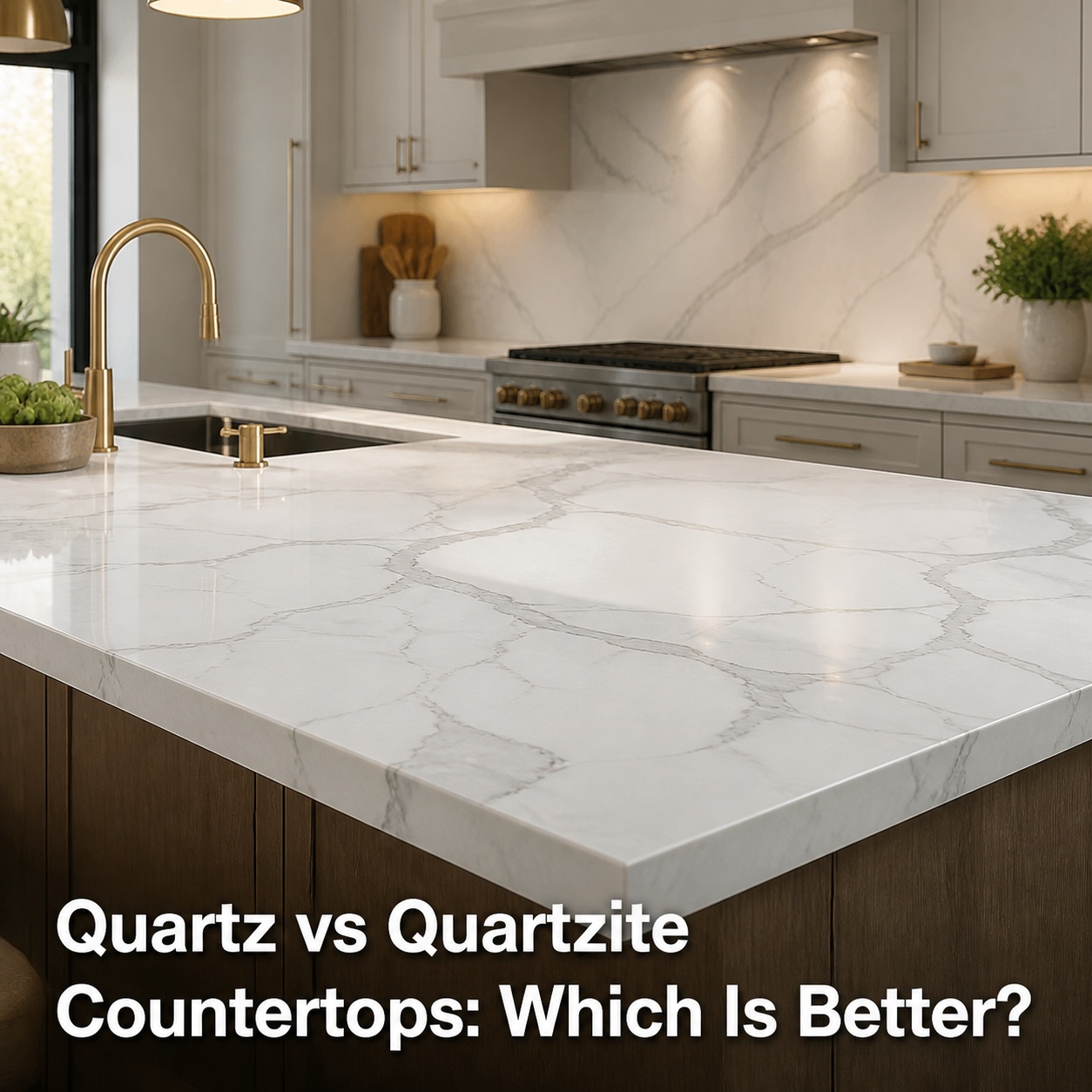
Choosing the right countertop material is one of the most consequential decisions you’ll make during a kitchen or bathroom renovation. The surface you select affects how your space looks, how it performs under daily use, and how much time and money you’ll spend maintaining it over the years. Two materials that consistently top the list of popular choices are quartz and quartzite , and while their names sound nearly identical, they are fundamentally different products with very different strengths.
The confusion between these two materials is completely understandable. Homeowners browse showrooms, see similar-looking slabs, and assume they’re comparing variations of the same thing. They’re not. One is an engineered stone product manufactured in a factory. The other is a natural stone pulled from the earth. That distinction alone shapes everything from their appearance and durability to their maintenance needs and long-term costs.
This guide breaks down both materials side by side so you can make a confident, informed decision. Whether you’re renovating a high-traffic kitchen, upgrading a bathroom vanity, or planning an outdoor entertaining space, understanding the real differences between quartz and quartzite countertops will save you from costly surprises down the road.
Overview of Quartz and Quartzite Countertops
Before comparing performance, it helps to understand exactly what each material is and where it comes from. The names overlap, but the products are entirely distinct in composition, origin, and manufacturing process.
| Feature | Quartz | Quartzite |
|---|---|---|
| Type | Engineered stone | Natural stone |
| Primary Material | Crushed silica + resin binders | Metamorphic rock (sandstone) |
| Porosity | Non-porous | Porous (requires sealing) |
| Heat Resistance | Moderate | High |
| Maintenance Level | Low | Moderate |
| Color Consistency | Uniform and predictable | Varies slab to slab |
What Quartz Countertops Are Made Of
Quartz countertops are an engineered stone product, meaning they are manufactured rather than quarried. The process combines roughly ninety percent crushed silica with resin binders, pigments, and sometimes recycled materials to create a dense, uniform slab.
Because the manufacturing process is controlled, quartz countertops offer consistent color, pattern, and thickness across every slab. This makes them a reliable choice for large installations where matching slabs matter. The resin binders also make the surface non-porous, which has significant implications for maintenance and hygiene.
What Quartzite Countertops Are Made Of
Quartzite is a natural stone formed when sandstone undergoes intense heat and pressure deep within the earth. The result is an extremely hard metamorphic rock composed primarily of silica crystals fused together. It is quarried in large blocks, cut into slabs, and finished for countertop use.
Because quartzite is a natural stone, no two slabs are identical. The veining, color variation, and surface texture are products of geological processes that cannot be replicated. This uniqueness is a major part of its appeal for homeowners who want a one-of-a-kind surface with authentic character.
Visual Appearance and Style Differences
Quartz countertops are available in an enormous range of color options, from solid whites and blacks to patterns that convincingly mimic marble countertops and granite countertops. Interior design flexibility is one of quartz’s strongest selling points because manufacturers can produce virtually any look on demand.
Quartzite tends to display soft, flowing veins in whites, grays, and warm tones, often resembling high-end marble. The natural variation means your countertop will look like no one else’s. However, color options are limited to what nature produces, so matching specific design palettes can require more searching.
Feature-by-Feature Performance Comparison
Understanding how each material performs in real-world conditions is where the decision gets practical. Both materials are strong contenders, but they excel in different areas.
Durability, Hardness, and Everyday Wear
Both quartz and quartzite rank among the hardest countertop materials available. Quartzite scores very high on the Mohs hardness scale, often harder than granite countertops, making it exceptionally resistant to physical damage from daily use. Quartz engineered stone also performs well, though the resin content can make it slightly softer than pure quartzite in direct comparisons.
For everyday durability, both materials hold up well under normal kitchen activity. Chips and cracks are uncommon with either surface when properly installed. The bigger durability concern with quartzite is its porosity, which, if left unsealed, can allow liquids to penetrate and weaken the stone over time.
Heat, Scratch, and Stain Resistance
Heat resistance is one area where quartzite clearly outperforms quartz. As a natural stone, quartzite can handle high temperatures without damage. Quartz countertops, by contrast, contain resin binders that can discolor, crack, or warp under sustained heat exposure. Trivets and hot pads are strongly recommended with quartz surfaces.
Scratch resistance favors quartzite as well, given its exceptional hardness. Quartz performs well against scratching in everyday use, but sharp objects can still leave marks on the resin-containing surface. Stain resistance, however, flips the comparison entirely. Because quartz is non-porous, spills sit on the surface and wipe away cleanly. Quartzite’s porosity means that without proper sealing, acidic liquids like wine, citrus juice, and coffee can penetrate and stain the stone.
Maintenance, Sealing, and Cleaning Requirements
If you’re looking for the lowest maintenance countertop option available, quartz wins this category without much debate. Its non-porous surface requires no sealing, no special cleaners, and no periodic treatments. Mild soap and water handle virtually every cleaning task.
Quartzite requires more attention. Sealing is necessary at installation and must be repeated periodically depending on the stone’s porosity and the sealant used. Daily cleaning is straightforward, but homeowners need to be mindful of acidic substances that can etch the surface even through a sealant layer. The maintenance commitment is manageable but real.
Installation Considerations and Design Flexibility
Both materials are heavy and require professional installation. Quartz slabs are dense and uniform, making them somewhat easier for fabricators to work with consistently. Quartzite, being a natural stone, can vary in thickness and density across a single slab, which requires experienced fabricators who understand natural stone behavior.
Quartz offers superior design flexibility for complex kitchen layouts because its consistent composition allows for precise cuts and edge profiles. Quartzite can achieve beautiful edge profiles as well, but the natural variation in the stone means fabricators must work more carefully to avoid cracking during cutting. For bathroom countertops and vanity applications, both materials perform well in installation.

Cost, Value, and Long-Term Investment
Cost is almost always a deciding factor in countertop selection, and both quartz and quartzite sit in the premium tier of countertop materials. Understanding what drives the price helps you make smarter decisions about where to invest.
Material and Installation Price Ranges
Both quartz and quartzite are premium countertop materials, but their pricing is driven by different factors. Quartz pricing is influenced by the brand, the complexity of the pattern, the thickness of the slab, and the fabrication required for your specific layout. Higher-end quartz products that closely mimic natural stone aesthetics tend to cost more than simpler solid-color options.
Quartzite pricing is driven by rarity, origin, and the complexity of the veining. Exotic quartzite varieties sourced from specific regions command significantly higher prices than more common varieties. Installation costs for both materials are comparable, though quartzite’s natural variability can sometimes add fabrication time and cost. For an accurate picture of what your specific project will cost, requesting a written quote based on your actual space is the only reliable approach.
Lifetime Ownership Costs and Repair Needs
Over the full life of a countertop, the ongoing costs differ meaningfully between these two materials. Quartz requires virtually no maintenance spending beyond routine cleaning supplies. There are no sealants to purchase, no professional treatments to schedule, and no periodic refinishing. What you pay upfront is largely what you pay in total.
Quartzite carries ongoing sealing costs that accumulate over time. Depending on the stone’s porosity and the products used, professional sealing or quality DIY sealants represent a recurring expense. If quartzite is not properly maintained and staining or etching occurs, professional restoration can be costly. Chips and cracks in either material typically require professional repair, and both hold up well enough that repairs are infrequent under normal use.
Impact on Home Resale Value and Buyer Appeal
Both quartz and quartzite countertops add meaningful value to a home, and both are recognized by buyers as premium upgrades. If maximizing resale value is a priority, the choice between these two materials matters less than the quality of the installation and how well the surface complements the overall kitchen design.
Quartzite’s natural stone status and unique appearance can be a strong selling point for buyers who value authenticity and luxury. Quartz appeals to buyers who prioritize practicality and low maintenance. In competitive real estate markets, either material signals a quality renovation. The key is ensuring the countertop looks fresh, is free of damage, and fits the style of the home.
Best Use Cases and How to Choose Between Quartz and Quartzite
The right material depends heavily on how you use your kitchen, your tolerance for maintenance, and what aesthetic you’re trying to achieve. Neither material is universally better , they simply serve different priorities.
Ideal Scenarios for Quartz Countertops
Quartz countertops are an excellent fit for households that prioritize ease of care above all else. Families with young children, homeowners who cook frequently, and anyone who wants a surface that forgives spills and messes without special treatment will find quartz highly practical.
Quartz is also the better choice for anyone who wants precise color matching across multiple slabs or needs a specific look that natural stone cannot reliably deliver. For those comparing options across multiple stone types, understanding how quartz stacks up against granite can also help clarify where engineered stone fits in the broader countertop landscape.
- High-traffic kitchens where spills are frequent
- Households with children or pets
- Homeowners who want consistent color across large installations
- Anyone seeking a low-maintenance surface without sealing requirements
- Spaces where a specific color or pattern must match existing design elements
Ideal Scenarios for Quartzite Countertops
Quartzite is the right choice for homeowners who want the authentic beauty of natural stone and are willing to invest in proper maintenance to preserve it. Its heat resistance makes it particularly well-suited for serious cooks who regularly place hot pans on the counter surface.
Quartzite also works beautifully in spaces where visual drama and uniqueness are priorities. A statement kitchen island or a luxury bathroom vanity in quartzite creates an impression that engineered stone simply cannot replicate. For guidance on selecting the right surface for a bathroom specifically, exploring the best countertop material for a bathroom vanity can help narrow down the decision.
- Homeowners who value natural stone authenticity and unique veining
- Kitchens where heat exposure from pots and pans is a regular concern
- Luxury renovations where visual impact is a top priority
- Homeowners committed to periodic sealing and proper stone care
- Spaces where a one-of-a-kind aesthetic is more important than uniformity
Decision Checklist Based on Lifestyle and Kitchen Habits
Use this checklist to identify which material aligns with your actual lifestyle rather than just your aesthetic preferences.
- Do you cook frequently and place hot items on the counter? Quartzite handles heat better.
- Do you want zero sealing or special maintenance? Quartz is the clear choice.
- Is a unique, natural appearance your top priority? Quartzite delivers what engineered stone cannot.
- Do you need consistent color across multiple slabs? Quartz offers reliable uniformity.
- Are you planning an outdoor kitchen space? Neither material is ideal outdoors, but quartzite handles UV exposure better than quartz.
- Is long-term maintenance cost a concern? Quartz has lower lifetime ownership costs.
- Do you want a surface that mimics marble without marble’s fragility? Both can achieve this, but quartzite does it naturally.
Conclusion
Quartz and quartzite are both exceptional countertop materials that serve different homeowners well. Quartz wins on maintenance simplicity, stain resistance, and design consistency. Quartzite wins on natural beauty, heat resistance, and authentic stone character. Neither is objectively better , the right choice depends entirely on your priorities, your lifestyle, and how you use your space.
If low maintenance and predictable performance are your top concerns, quartz is the smarter investment. If you want a surface with genuine natural stone character and you’re prepared to maintain it properly, quartzite delivers a level of beauty that engineered stone cannot fully replicate. Take the time to see both materials in person, consider your daily habits honestly, and choose the surface that fits your real life rather than just your inspiration board.
FAQ
Which is more durable for a busy kitchen, quartz or quartzite?
Both materials are highly durable, but they have different vulnerabilities. Quartz resists stains better due to its non-porous surface, making it more forgiving in a busy kitchen where spills are frequent. Quartzite is harder and handles heat better, but its porosity requires consistent sealing to prevent staining. For a detailed look at how different materials perform under heavy daily use, reviewing guidance on the best countertop material for a busy kitchen provides useful context. Overall, quartz tends to be the more practical choice for high-traffic cooking environments.
Do quartz and quartzite countertops both need sealing?
No. Quartz countertops do not require sealing because the manufacturing process creates a non-porous surface. Resin binders fill any gaps between the crushed silica particles, leaving no pathways for liquids to penetrate. Quartzite, as a natural stone, is porous and absolutely requires sealing at installation and periodically thereafter. The frequency of resealing depends on the specific stone’s porosity level and the type of sealant applied. Skipping sealing on quartzite significantly increases the risk of staining and long-term surface damage.
Is quartz or quartzite better for outdoor kitchen spaces?
Neither quartz nor quartzite is the ideal choice for outdoor kitchen countertops, but for different reasons. Quartz contains resin binders that degrade under prolonged UV exposure and temperature fluctuations, causing discoloration and surface damage over time. Quartzite handles heat and UV exposure better as a natural stone, making it the more suitable of the two for outdoor use. However, its porosity means it requires more frequent sealing outdoors where it faces rain, humidity, and temperature swings. If outdoor use is your primary application, consulting with a fabricator about the most appropriate stone variety and sealant system for your specific climate is strongly recommended.