How Long Do Quartz Countertops Last? Facts to Know
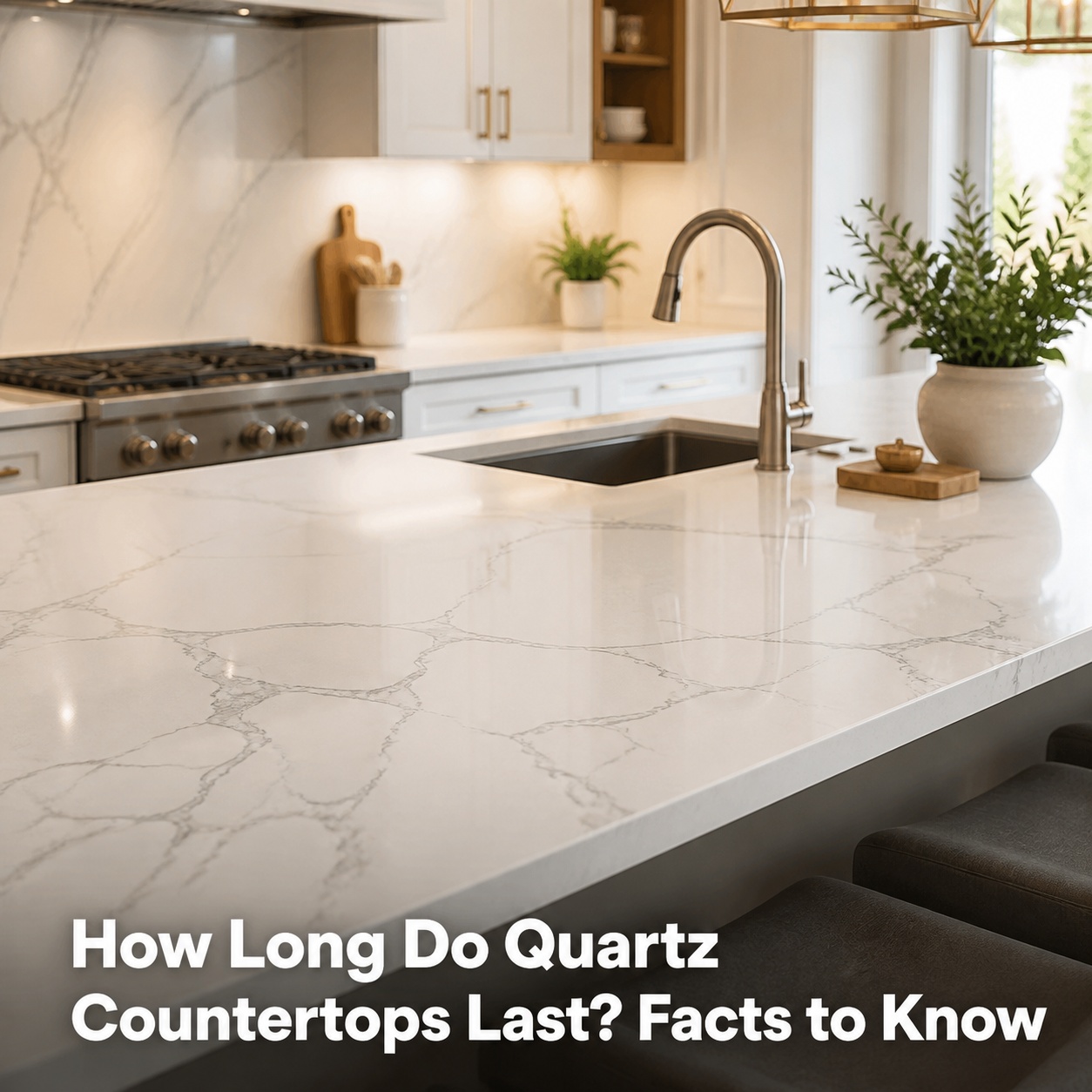
Quartz countertops have become one of the most popular choices for kitchens and bathrooms, and for good reason. They look polished, hold up well under daily use, and require far less upkeep than many natural stone options. But before committing to this material, most homeowners want to know one thing: how long will it actually last?
The honest answer is that quartz countertops can last a lifetime when properly installed and cared for. That said, lifespan is not just about the material itself. It depends on how the surface is used, how it is cleaned, and whether small problems are addressed before they grow into bigger ones.
This guide covers everything you need to know about the durability of quartz countertops, what shortens their lifespan, and how to get the most out of your investment. If you are comparing materials or planning a kitchen renovation, the information here will help you make a confident, well-informed decision.
How Long Quartz Countertops Typically Last
Average Lifespan and What “Long-Lasting” Means
Quartz countertops are built to last. Under normal household conditions, they routinely hold up for decades without significant degradation. Many manufacturers back their products with a lifetime warranty, which signals just how confident they are in the material’s longevity.
The lifespan of quartz countertops is not a fixed number. It is a range shaped by how the surface is treated. A well-maintained countertop in a low-traffic home will outlast a neglected one in a busy kitchen by many years.
Here is a quick comparison of expected lifespans across common countertop materials:
| Material | Expected Lifespan | Requires Sealing | Warranty Typical |
|---|---|---|---|
| Quartz | Lifetime with care | No | Lifetime (varies by brand) |
| Granite | Decades with sealing | Yes | Limited |
| Marble | Long but high maintenance | Yes | Limited |
| Laminate | Shorter term | No | Short-term |
Resale value also benefits from a long-lasting countertop. Buyers notice quality surfaces, and quartz consistently ranks among the top materials for adding perceived value to a home.
What Quartz Is and Why It Affects Durability
Quartz countertops are not made from a single slab of natural stone. They are engineered stone products, typically composed of roughly ninety percent ground silica and quartz crystals bound together with resin and pigments. Manufacturers have refined this process to produce surfaces that are dense, non-porous, and highly consistent.
Because the material is engineered, manufacturers can control its properties more precisely than with natural stone. The result is a surface with excellent scratch resistance, strong stain resistance, and reliable durability across the entire slab.
The resin component is what makes quartz non-porous, which means bacteria and moisture cannot penetrate the surface the way they can with granite or marble. This is a significant advantage in kitchen countertops and bathroom vanities alike.
Key Factors That Affect Lifespan
Installation Quality and Sealing at Edges
Even the best quartz slab can fail prematurely if it is not installed correctly. Poor installation leads to uneven support, which puts stress on the countertop and increases the risk of cracking over time. The edges and seams are especially vulnerable.
Unlike granite countertops, quartz does not require sealing across the surface. However, the edges and seams where two slabs meet should be finished and joined properly. A gap or poorly bonded seam allows moisture to work its way underneath, which can cause warping of the substrate or damage to the adhesive over time.
Hiring an experienced installer matters more than most homeowners realize. Most manufacturer warranties also depend on professional installation, so cutting corners here can void your coverage.
Daily Use, Heat, and Impact Damage
Quartz handles daily kitchen use well, but it is not indestructible. Heat resistance is one area where quartz has a real limitation. Placing a hot pan directly on the surface can cause thermal shock, which may lead to discoloration or cracking. The resin in engineered stone is more heat-sensitive than the stone itself.
Impact damage is another concern. Dropping a heavy object on the edge of a quartz countertop can cause chips and cracks, particularly at corners. The edges are the most structurally vulnerable part of any slab.
UV resistance is also worth noting. Quartz countertops installed near windows or in outdoor kitchens may experience fading over time because the resin does not hold up as well under prolonged sun exposure as natural stone does.
Cleaning Habits and Product Choices
Cleaning is one of the most overlooked factors in countertop lifespan. Quartz is low maintenance, but that does not mean anything goes. Harsh chemicals, abrasive scrubbers, and highly acidic or alkaline cleaners can break down the resin over time and dull the surface finish.
The safest approach is warm water, mild dish soap, and a soft cloth. For tougher messes, a gentle stone cleaner works well. Avoid bleach-based products, oven cleaners, and anything with a very high or very low pH.
- Use a soft cloth or non-abrasive sponge
- Stick to pH-neutral or mild cleaning products
- Wipe up spills promptly, especially oils and pigmented liquids
- Avoid leaving standing water near seams or edges
How to Extend the Life of Quartz Countertops
Routine Care and Safe Cleaning Practices
Consistent, simple maintenance is the single best thing you can do for your quartz countertops. A quick daily wipe-down prevents buildup that becomes harder to remove over time. Stain resistance is high, but it is not unlimited. Certain substances like wine, coffee and turmeric can leave marks if left to sit.
For homeowners who want a surface that stays beautiful with minimal effort, quartz is one of the best low-maintenance countertop materials available. The non-porous surface means no sealing, no special treatments, and no annual upkeep rituals.
Routine care also means inspecting seams and edges periodically. Catching a small crack or lifting seam early makes repair far simpler and less costly than waiting until the damage spreads.
Preventing Chips, Cracks, and Discoloration
Prevention is straightforward once you know the vulnerabilities. Always use trivets or heat pads under hot cookware. Use a cutting board rather than cutting directly on the surface, even though quartz has good scratch resistance. The surface can handle light contact, but repeated knife use will eventually dull both the blade and the finish.
- Place trivets under hot pots, pans, and appliances
- Use cutting boards for all food prep
- Avoid dropping heavy items near edges and corners
- Keep countertops out of prolonged direct sunlight when possible
- Do not use the countertop as a step stool or work platform
Discoloration from UV exposure is harder to reverse once it happens. If your kitchen or bathroom gets significant sun, consider window treatments or choose a quartz product specifically rated for better UV resistance.
When Repairs Make Sense Versus Replacement
Small chips and hairline cracks can often be repaired with a color-matched epoxy or resin filler. The repair will not be invisible up close, but it can restore structural integrity and prevent the damage from spreading. For minor cosmetic issues, repair is almost always the smarter financial choice.
Countertop replacement makes more sense when damage is widespread, when the substrate beneath has been compromised by moisture, or when the surface has faded or stained beyond what cleaning can address. At that point, the cost of multiple repairs may approach or exceed the cost of a new installation.
If you are unsure whether repair or replacement is the right call, get a professional assessment. A qualified fabricator can tell you quickly whether the damage is cosmetic or structural.
Quartz Countertops Compared With Other Materials
Quartz vs. Granite
Both quartz and granite countertops are durable, long-lasting, and popular in kitchens. The key difference is that granite is a natural stone that requires periodic sealing to maintain its stain resistance, while quartz is engineered and non-porous from the start.
Granite has a unique, one-of-a-kind appearance that some homeowners prefer. Quartz offers more consistency in color and pattern, which makes it easier to match across a large kitchen. For a deeper look at how these two materials stack up, the quartz vs. granite comparison breaks down the differences in durability, maintenance, and overall value.
In terms of lifespan, both materials can last for decades. Granite may require more ongoing maintenance to reach that same longevity.
Quartz vs. Marble and Budget Surfaces
Marble is a beautiful natural stone, but it is significantly more porous and softer than quartz. It scratches more easily, stains more readily, and requires consistent sealing and careful maintenance. For high-traffic kitchens, marble demands a level of attention that many homeowners find impractical. If you are weighing the two, the marble vs. quartz breakdown offers a clear side-by-side look at real-world performance.
Laminate countertops sit at the entry-level tier of the market. They are affordable and come in a wide range of styles, but their lifespan is considerably shorter. Laminate is prone to chipping, swelling near water, and surface wear that quartz simply does not experience.
Different Priorities: Durability, Maintenance, and Cost
Choosing a countertop material comes down to what you value most. If durability and low maintenance are the top priorities, quartz is hard to beat. If budget is the primary concern, the entry-level granite and quartz collections are the place to start. If aesthetics and a natural look matter most, granite or marble may be worth the extra upkeep.
Cost is driven by several factors: the brand, the thickness of the slab, the complexity of the edge profile, the size of the installation, and local labor rates. Premium collections sit at the higher end of the market. Mid-range engineered stone offers similar performance for less. Even entry-level quartz outlasts the budget surfaces it is usually compared against.
For anyone planning a renovation and weighing material options, getting a written quote based on your actual space is the only way to get an accurate cost picture. Published estimates rarely reflect real project variables.
Conclusion
Quartz countertops are one of the most durable and practical surfaces available for kitchens and bathrooms. With proper installation, sensible daily habits, and basic cleaning, they can last a lifetime. The material’s engineered composition gives it advantages over natural stone in consistency, stain resistance, and ease of maintenance.
The factors that shorten a quartz countertop’s lifespan are largely preventable: heat exposure, harsh cleaners, poor installation, and ignoring small damage before it spreads. Address those issues, and your countertop will stay in excellent condition for decades.
If you are still deciding on the right material for your space, consider how the surface will actually be used day to day. Quartz performs exceptionally well in busy households and is a strong choice for anyone who wants beauty without high maintenance demands.
FAQ
Do quartz countertops last longer than granite?
Both materials are highly durable and can last for decades. Quartz has an advantage in that it does not require sealing, which reduces the maintenance burden and the risk of staining over time. Granite can match quartz in lifespan, but only with consistent upkeep. For most homeowners, quartz is the lower-effort path to long-term durability.
What usually causes quartz countertops to wear out?
The most common causes are heat damage from placing hot items directly on the surface, chemical damage from harsh cleaning products, UV fading near windows, and physical impact that chips edges or corners. Poor installation can also shorten lifespan significantly by creating stress points in the slab. Most of these causes are preventable with basic care.
Can quartz countertops be repaired if they chip or crack?
Yes, minor chips and cracks can be repaired using color-matched epoxy or resin filler. The repair is rarely completely invisible, but it restores the surface and prevents further damage. Larger cracks or widespread damage may indicate that countertop replacement is the more practical solution. A professional fabricator can assess the damage and recommend the best course of action.